Building Strong Careers in Modern Civil Engineering Fields

Building a successful future in civil engineering today requires more than technical knowledge it demands adaptability, continuous learning, and a clear understanding of how infrastructure, sustainability, and innovation are reshaping the industry. Professionals who align themselves with the right opportunities and organizations can build long-term, meaningful careers with strong growth potential.

In this evolving landscape, Building Strong Careers in Modern Civil Engineering Fields plays a central role in connecting talent with advanced engineering projects and structured career pathways. Platforms like Bouwhuysch demonstrate how modern engineering recruitment and project matching can support professionals in finding roles that align with both their skills and ambitions, especially in areas like infrastructure, water management, and sustainable development. At https://bouwhuysch.nl/, skilled engineers can connect with top projects in infrastructure, water, and construction sectors.

The Growing Importance of Modern Civil Engineering Careers

Civil engineering is no longer limited to traditional construction work. It now includes smart infrastructure, climate-resilient design, and digital engineering tools. This shift creates more opportunities for engineers who are ready to evolve with the industry.

Key growth areas include:

  • Sustainable infrastructure development
  • Water and environmental engineering
  • Smart city and digital construction solutions
  • Asset management and lifecycle planning
  • Energy transition and green engineering projects

Why Career Development Matters in Civil Engineering

Infrastructure Projects

Career development is essential because the industry is highly project-driven and constantly evolving. Engineers who invest in skill development often gain access to higher responsibility roles and more complex projects.

Benefits of structured career growth:

  • Better exposure to large-scale infrastructure projects
  • Increased technical and leadership skills
  • Stronger professional networks within the industry
  • Access to international engineering opportunities
  • Long-term career stability in a high-demand field

Opportunities in a Connected Engineering Ecosystem

Modern engineering careers are increasingly shaped by networks that connect professionals with employers, consultants, and government projects. Recruitment-focused platforms help engineers find roles that match their expertise while also supporting long-term development.

Organizations like Bouwhuysch emphasize:

  • Personalized career guidance for engineers
  • Matching professionals with top infrastructure projects
  • Supporting trainees, young professionals, and experienced engineers
  • Encouraging continuous learning and skill advancement

Skills That Strengthen Civil Engineering Careers

To succeed in today’s competitive environment, engineers should focus on both technical and soft skills.

Important skills include:

  • Structural and geotechnical design knowledge
  • Project management and planning
  • Digital engineering tools (BIM, simulation software)
  • Communication and teamwork abilities
  • Problem-solving in real-world construction challenges

Future Outlook for Civil Engineering Professionals

The future of civil engineering is highly promising due to global infrastructure demand and sustainability goals. Engineers who stay proactive and open to innovation will continue to find rewarding career paths across public and private sectors.

Key future trends:

  • Increased focus on climate-resilient infrastructure
  • Expansion of renewable energy projects
  • Greater use of AI and data-driven engineering
  • Growth in smart infrastructure systems

Conclusion

Civil engineering offers a dynamic and rewarding career path for professionals who are willing to grow with the industry. With the right guidance, continuous learning, and access to strong professional networks, engineers can build stable and impactful careers that contribute to shaping modern society.

Easy Cancellation Policies Provide Flexibility In Car Rental Planning

Modern mobility services are designed to support convenience, adaptability, and stress-free planning. One of the most appreciated features is flexible cancellation options, which allow users to adjust plans without unnecessary complications. This approach enhances comfort and gives greater control over travel arrangements, making the overall experience more user-friendly and reassuring.

Importance of Flexible Cancellation Options

Flexible cancellation policies play a key role in building confidence and supporting smooth planning decisions. They reduce pressure during bookings and help users manage unexpected changes with ease.

  • Encourages stress-free planning and decision-making
  • Provides freedom to adjust or modify travel arrangements
  • Reduces concerns about unexpected changes in plans
  • Enhances overall satisfaction with service experience
  • Builds a sense of trust and reliability
  • Supports better financial planning and control

Key Features of Easy Cancellation Systems

Well-designed cancellation systems focus on clarity, simplicity, and convenience. They ensure users can make changes without difficulty or confusion. Customers interested in details may read more here to understand booking procedures and choose the right vehicle confidently.

  • Simple and user-friendly cancellation process
  • Clear guidelines that are easy to understand
  • Quick confirmation of changes or cancellations
  • Transparent terms that avoid confusion
  • Accessible support for assistance when needed
  • Seamless digital and offline cancellation options

Benefits for Travel Planning Flexibility

Flexible cancellation policies provide significant advantages for travelers, allowing them to adapt plans based on changing needs or preferences.

  • Freedom to adjust travel plans without stress
  • Improved confidence during early bookings
  • Better control over travel schedules
  • Reduced risk associated with uncertain plans
  • Easier coordination for group or family travel
  • Enhanced peace of mind throughout the planning process

Customer Experience Advantages

A smooth cancellation experience contributes positively to overall satisfaction. It strengthens trust and encourages repeat usage by ensuring convenience at every stage.

  • Hassle-free modification of reservations
  • Quick response to cancellation requests
  • Smooth communication during changes
  • Increased comfort in managing bookings
  • Positive perception of service reliability
  • Higher satisfaction with overall experience

Role of Transparency in Cancellation Policies

Transparency is essential in creating trust and clarity. When cancellation rules are clearly communicated, users can make informed decisions confidently.

  • Clear explanation of cancellation conditions
  • No hidden terms or confusing clauses
  • Easy-to-understand policy structure
  • Better awareness before confirming bookings
  • Increased trust in service reliability
  • Stronger sense of fairness and openness

Technology Supporting Easy Cancellation

Modern systems use advanced digital tools to simplify cancellation processes and improve accessibility. This ensures convenience at every step.

  • Online access for quick modifications
  • Automated confirmation systems
  • Real-time updates on booking status
  • Easy navigation through digital platforms
  • Efficient communication channels
  • Reduced waiting time for processing requests

Enhancing Flexibility in Travel Decisions

Flexible cancellation options empower users to make better decisions without pressure. This adaptability improves overall travel planning experiences.

  • Ability to plan ahead with confidence
  • Reduced hesitation during booking
  • Greater flexibility in changing circumstances
  • Improved coordination with personal schedules
  • More efficient management of travel needs

Conclusion

Easy cancellation policies significantly enhance flexibility in travel planning by offering convenience, clarity, and control. They support stress-free decision-making and allow users to adjust plans effortlessly when needed. By focusing on transparency, accessibility, and efficiency, these systems create a positive and reliable experience that strengthens trust and improves overall satisfaction.

How to Design a Metal Business Card With a QR Code That Actually Gets Scanned

Metal business cards are gorgeous. They’re also weirdly easy to mess up.

A QR code that scans on a screen or on paper can fall apart on metal because metal loves doing the two things scanners hate most: reflecting light and blurring edges. So if your goal is “people actually scan this,” you’re not designing a card. You’re designing a tiny, durable machine-readable target that happens to look like a business card.

One line to keep you honest: the QR code is the product; the card is the packaging.


 The real problem you’re solving (and it’s not durability)

Look, durability is table stakes. The friction you’re fighting is scan anxiety: that awkward half-second where someone points their phone, nothing happens, they tilt it, glare blooms across the code, and the moment dies.

A metal business card with QR code works when it:

– reads instantly as a scannable code (not “cool pattern”)

– survives fingerprints and pocket wear without turning into a shiny smudge-board

– scans fast under mediocre lighting (conference halls are brutal)

– doesn’t require the recipient to “learn” where to aim their camera

That’s the bar. Anything less and you’ve basically paid extra money for a conversation stopper.
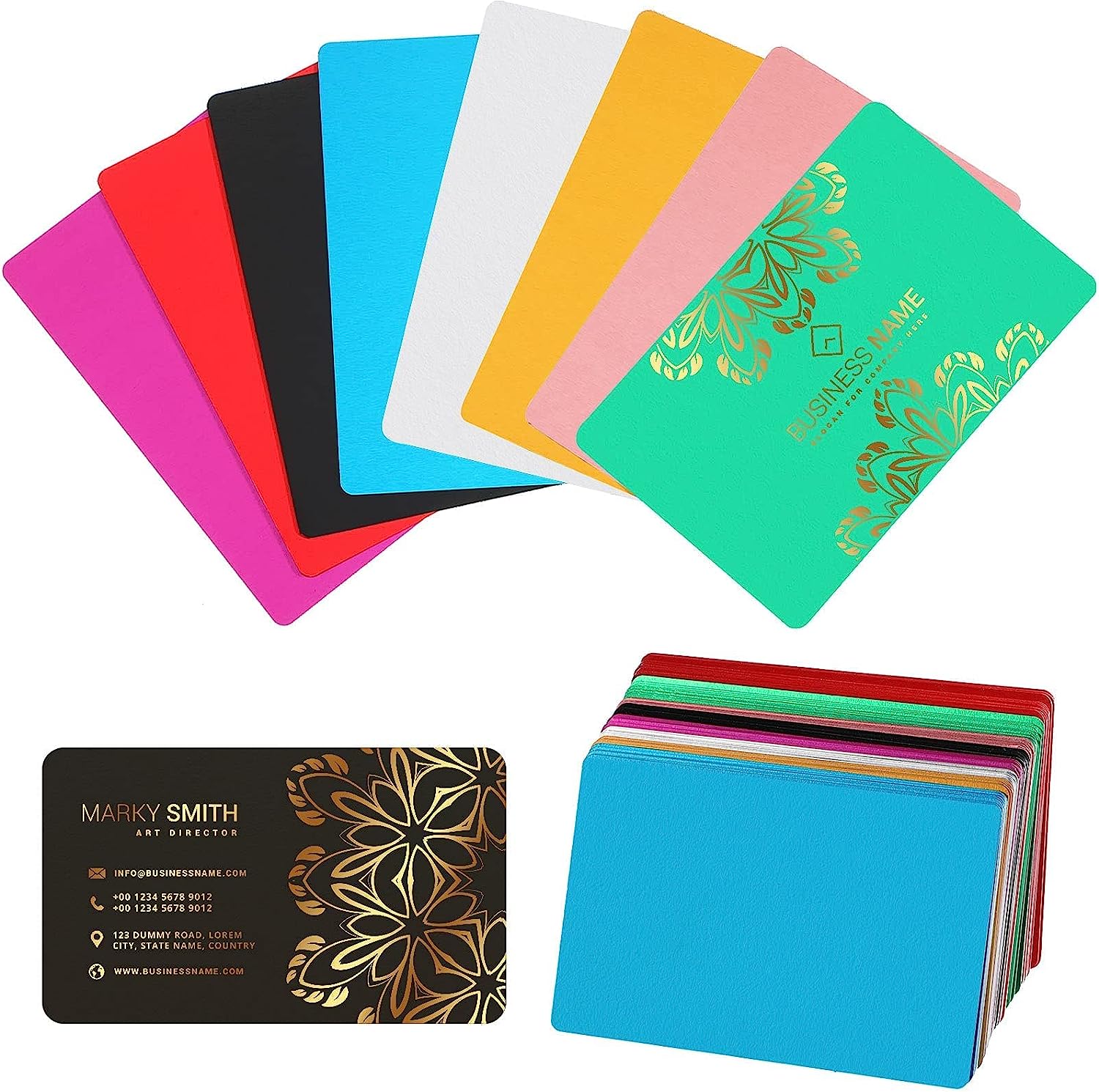
Metal Card

 Hot take: polished metal is a QR-code killer.

Polished stainless looks expensive right up until it reflects a ceiling light straight into the camera and your QR turns into a white rectangle.

If you want scan reliability, you want controlled light. Matte, satin, or fine brush. Low specular reflection. Consistent tone. Predictable contrast.

Now, this won’t apply to everyone, but if your brand absolutely demands gloss, you’ll need to carve out a matte “scan window” just for the QR area. I’ve seen brands try to muscle through with deeper engraving instead. It usually fails in the real world.


 Metal choice: vibe matters, but manufacturing matters more

People obsess over stainless vs brass like it’s a personality quiz. It’s not. It’s a production decision with branding consequences.


 Quick-and-useful guidance

Stainless steel: tough, premium, resists bending. Laser marking is common and consistent. Heavier in-hand (some people love that).

Aluminum: lighter, easier to handle, often cheaper. Can scratch/dent depending on thickness and finish. Great if you’re mailing lots of cards.

Brass: warm, “legacy premium” feel. Patina is real; your pristine QR contrast might not stay pristine unless you plan for aging.

In my experience, stainless with a matte or brushed face is the least dramatic path to “it scans every time.”


 The finish is where scanning lives or dies

A QR code doesn’t need artistry. It needs edges. Sharp module edges. Clear finder patterns. No visual noise.

If you take nothing else from this article, take this: your finish should reduce glare and preserve edge clarity.


 Finishes that tend to behave

– Fine brushed (directional texture can work great if the code sits cleanly on it)

Matte PVD (nice when done well; test coatings for glare)

Bead-blasted (can be excellent, but too rough and you start losing crispness)


 Finishes that regularly betray you

– Mirror polish

– Highly glossy clear coats over the QR area

– Anything with “sparkle” texture or heavy grain that competes with the code’s grid

And yes, coatings can protect. They can also create a reflective layer that wrecks scanning. Test before you commit.


 QR code design for metal: stop getting fancy

You can style a QR code. You just can’t style it carelessly on metal.

Here’s the specialist briefing version:

– Keep the quiet zone intact (the blank margin around the code). Don’t fill it with texture, lines, logos, or “design elements.”

– Use high contrast. Phones decode contrast, not vibes.

– Don’t distort module shapes. Rounded modules can work on paper; on metal they often degrade under glare.

– Prefer larger module size over “tiny elegant QR.” Metal production tolerances are real.

A lot of people ask for “deep engraving” because it looks luxurious. Here’s the thing: deep engraving creates shadows and bevel highlights that change with angle. That means the phone sees shifting patterns. Shallow, crisp marking usually wins.


 Placement: corner is good… until it isn’t

Most of the time, a corner placement is ideal because it’s predictable and quick to aim at. But don’t place it where the card is most likely to get:

– rounded edges from finishing

– thumb smears from how people hold the card

– scratches from sliding into wallets

I like lower right or upper right if the card’s handed over in a standard orientation. (Yes, people have “hand-over habits.” Watch a few exchanges and you’ll see it.)

Keep the QR on a flat, uninterrupted plane. If the surface curves, bevels, or transitions finishes near the code, you’re asking for distortion and glare gradients.

One-line rule: give the QR a clean stage.


 Typography on metal: you don’t get subtle for free

Metal doesn’t do “delicate” kindly. Thin strokes vanish. Tight tracking fills in. Tiny text becomes a shimmering suggestion depending on the light.

Go with:

– sturdy sans serif typefaces

– generous spacing

– clear hierarchy (name reads first, role second, everything else after)

And please don’t cram. White space is not wasted space on metal; it’s what makes the engraving legible when the light is bad and the card is moving in someone’s hand.


 The CTA near the code: short, specific, no mystery

A QR code without a cue is a social gamble. People don’t like gambling in networking situations.

Use a CTA that tells them what they get:

“Save my contact” beats “Scan me.”

“View portfolio” beats “Learn more.”

“Get a quote” beats “Visit website.”

Keep it close to the QR but not crowding the quiet zone. You’re guiding the eye, not building a collage.

(Also: punctuation can get noisy on etched metal. You don’t need three exclamation points to sound confident.)


 One stat, because it’s useful context

QR scanning isn’t niche anymore. In 2023, around 89 million smartphone users in the U.S. scanned a QR code, and projections expected that number to keep rising. Source: Statista (U.S. QR code scanner users 2020, 2025).

So yes, people will scan. They just won’t fight your reflective finish to do it.


 Testing: treat it like hardware, not graphic design

This is where most metal QR card projects go off the rails: they approve a proof under perfect studio lighting and never test the ugly scenarios.

Test like a skeptic.


 A practical test matrix (simple but brutal)

Lighting: bright overhead (office), warm dim (bar), outdoor sun, indirect daylight

Phones: iPhone + at least one mid-range Android (camera processing differs)

Angles: straight-on, 15°, 30° tilt

Distance: “polite scan” distance (about 8, 12 inches) and “lazy scan” distance (18, 24 inches)

Take photos of failures. Note what kind of failure it is. Glare washout? Edge blur? Quiet zone contamination? Each one points to a different fix.

In production, document the tolerances you learned: engraving method, darkness/mark depth, finish spec, and the “do not touch” quiet zone dimensions. Fabricators can hit targets, if you give them targets.


 Production realities (a little unglamorous, but decisive)

Your design isn’t final until it can be reproduced consistently.

Decide early:

– laser marking vs etching vs fill/ink

– target contrast level (what “dark” means in actual output)

– acceptable variance across batches

And watch out for edge finishing. A gorgeous chamfer can nibble a QR corner if the code is too close to the perimeter. I’ve seen that happen more than once, and it’s the kind of mistake you only make when you’re designing with your eyes instead of with a scanner.


 If you want the “safe” recipe


Not always the sexiest, but it works:

Matte/brushed stainless + high-contrast laser mark + generous quiet zone + corner placement + short CTA.

Make the code bigger than you think you need. Keep the surface calm. Test under trash lighting. Then ship.

That’s how you end up with a metal card that gets scanned instead of admired and pocketed forever.

Lightweight spout pouches make transportation and handling more convenient daily

In today’s fast-paced world, convenience and efficiency are essential in packaging. Lightweight spout pouches have emerged as a game-changer for businesses and consumers alike. Designed to simplify transportation and handling, these innovative pouches combine practicality with flexibility, offering a superior solution for liquid and semi-liquid products.

Effortless Transportation

One of the most significant advantages of lightweight spout pouches is their impact on transportation:

  • Reduced Shipping Costs: Being lighter than traditional containers, these pouches lower shipping weight, making logistics more cost-effective.
  • Compact Storage: Their flexible structure allows more units per pallet or truck, maximizing storage space and minimizing delivery trips.
  • Durable on the Move: Despite their lightness, spout pouches are robust and resistant to punctures, ensuring products reach destinations safely.

These features make lightweight spout pouches ideal for businesses that value efficient distribution and streamlined supply chains. Manufacturers design user-friendly caps to improve functionality of the spout pouch.

Simplified Handling

Handling and usage become seamless with lightweight spout pouches, benefiting both retailers and consumers:

  • Easy to Lift and Carry: The reduced weight makes it easier for staff and customers to transport products without strain.
  • User-Friendly Design: Integrated spouts and resealable caps simplify pouring and dispensing, enhancing the overall experience.
  • Safe Storage: Flexible pouches conform to shelves and storage areas, reducing the risk of tipping or breakage.

This combination of portability and practicality contributes to a smoother workflow in daily operations.

Environmental and Practical Advantages

Beyond convenience, lightweight spout pouches support sustainable practices:

  • Material Efficiency: Less material is required compared to rigid packaging, reducing overall resource consumption.
  • Lower Carbon Footprint: Reduced weight in transportation contributes to decreased fuel usage, supporting greener logistics.
  • Recyclable Options: Many pouches are designed with recyclability in mind, promoting responsible disposal practices.

These benefits make lightweight spout pouches a forward-thinking choice for environmentally conscious businesses.

Ideal for Diverse Applications

The versatility of lightweight spout pouches is unmatched. They are perfect for:

  • Beverages: Juices, smoothies, and energy drinks travel safely without the burden of heavy packaging.
  • Sauces and Condiments: Easy-to-pour spouts ensure precision and reduce mess.
  • Liquid Snacks: Convenient for on-the-go consumption, offering portability and freshness.

Whether in retail, foodservice, or direct-to-consumer delivery, these pouches adapt to various product types with ease.

Conclusion

Lightweight spout pouches are transforming how products are transported, handled, and consumed. Their combination of convenience, durability, and sustainability makes them an excellent choice for modern packaging solutions. By reducing shipping costs, simplifying handling, and supporting eco-friendly practices, these pouches empower businesses to operate efficiently while enhancing consumer satisfaction. Embracing lightweight spout pouches means embracing a smarter, more practical approach to packaging that benefits everyone in the supply chain.